
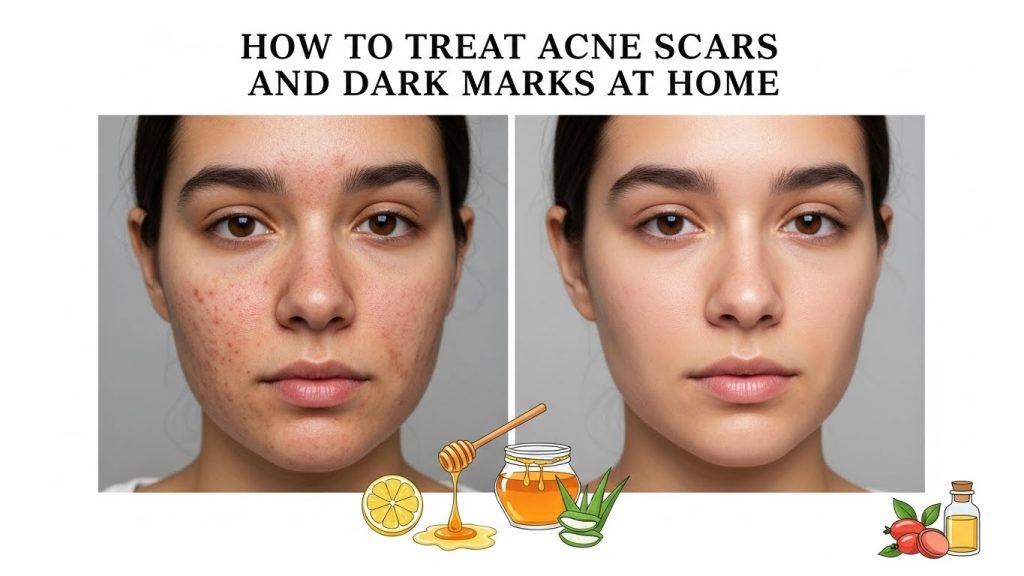
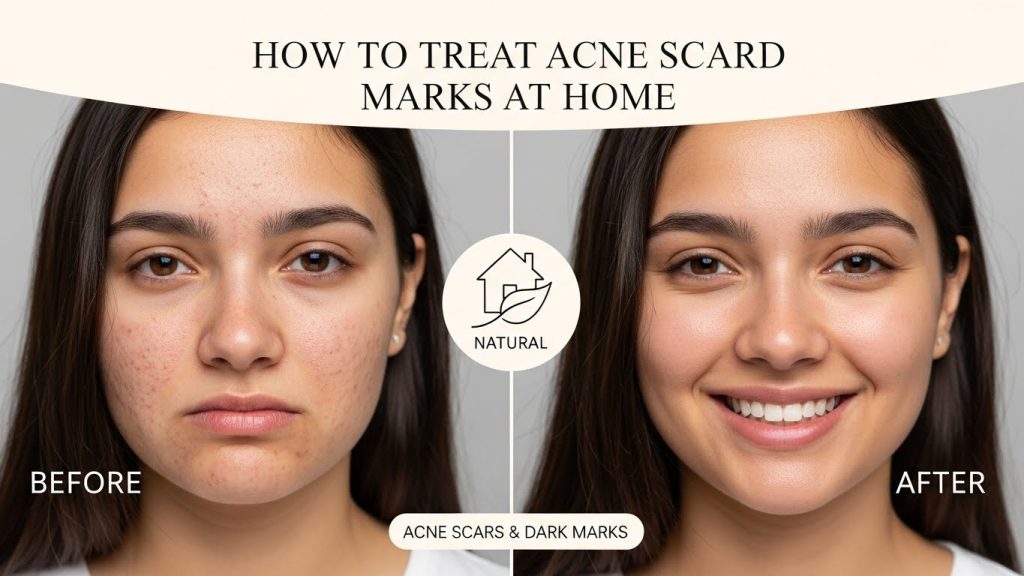
If you’ve finally got your breakouts under control but are left with spots and dents all over your skin, you’re not alone. Many people want to know how to treat acne scars and dark marks at home without spending a fortune on in-clinic treatments.
The good news? You can lighten dark marks and soften the look of some shallow scars at home with the right routine and ingredients. The not-so-fun truth? It takes consistency, patience, and realistic expectations. If you’re starting from scratch, pair this guide with our 5-step skincare routine for glowing skin to build a simple base routine before adding scar treatments.

In this guide, we’ll cover:
- The difference between acne scars and dark marks
- Key at-home ingredients that actually help
- A simple morning and night routine for fading marks
- What to avoid so you don’t make things worse
- When it’s time to see a dermatologist
Note: This is educational, not medical advice. If you have severe scarring or a skin condition, always talk to a dermatologist.
Table of Contents
Acne Scars vs Dark Marks: Know What You’re Treating
Before you learn how to treat acne scars and dark marks at home, it helps to know what you’re dealing with. Not every mark is the same.
1. Dark Marks (Post-Inflammatory Hyperpigmentation)
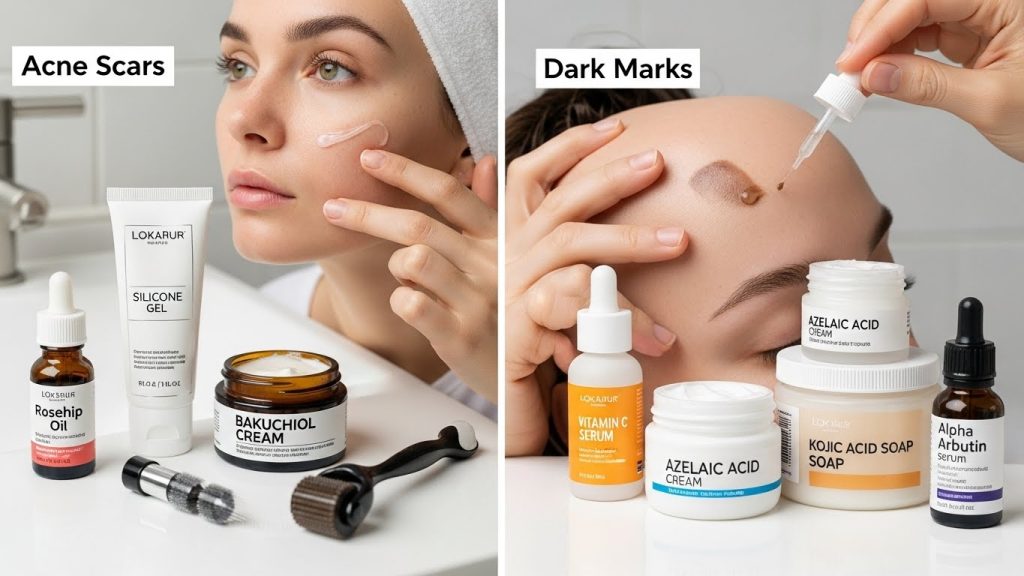
These are flat brown, purple, or dark spots left behind after a pimple heals. They’re not raised or indented—just discoloration.
- Common on medium to deep skin tones
- Caused by inflammation triggering extra pigment
- Can fade over time with the right products and sun protection
2. Red or Pink Marks (Post-Inflammatory Erythema)
These are flat red or pink marks, often seen on lighter skin tones.
- They’re related to blood vessels, not pigment
- Often follow more inflamed pimples
- Can improve with gentle care, SPF, and time
3. True Acne Scars (Indented or Raised)
These are changes in skin texture:

- Icepick scars: deep, narrow pits
- Boxcar / rolling scars: wider, shallow depressions
- Hypertrophic or keloid scars: raised, thick scars
These are harder to treat with home care alone. You can still improve overall appearance, but bigger changes often need professional treatments (microneedling, laser, peels, etc.).
Golden Rules Before You Start Treating at Home
If you want real improvement when learning how to treat acne scars and dark marks at home, follow these fundamentals first:
- Do not pick or squeeze pimples. Every time you pick, you increase the risk of scars and dark marks.
- Control active acne first. There’s no point fading old marks while new breakouts keep forming.
- Use sunscreen daily. UV exposure makes dark marks darker and harder to fade.
- Be patient. Pigmentation and scars can take weeks to months to show improvement.
Key Ingredients That Help Fade Acne Scars and Dark Marks
You don’t need 20 products. Just a few proven ingredients used consistently can make a big difference.
1. Sunscreen (Non-Negotiable)
SPF is the most important part of how to treat acne scars and dark marks at home:
- Use broad-spectrum SPF 30 or higher every morning
- Reapply if you’re outdoors for long periods
- Prevents dark marks from getting darker and protects your progress
2. Vitamin C
Vitamin C is a powerful antioxidant and brightening ingredient.
- Helps fade dark marks and even out skin tone
- Adds glow and protects against environmental damage
- Works best in the morning under sunscreen
Start with a gentle vitamin C serum and use it a few times a week, then build up to daily use if your skin tolerates it.
3. Niacinamide
Niacinamide (vitamin B3) is great for nearly all skin types:
- Helps fade discoloration
- Strengthens the skin barrier
- Reduces redness and regulates oil
You can use niacinamide in the morning or night, often alongside other treatments.
4. Chemical Exfoliants (AHAs & BHAs)
Gentle chemical exfoliants help remove dead skin cells and smooth texture.

- AHAs (glycolic, lactic, mandelic acid):
- Great for surface pigmentation and mild texture
- BHAs (salicylic acid):
- Penetrate into pores, help with acne and clogged pores
Use 1–3 times per week at night, not every day if your skin is sensitive.
5. Retinoids (Retinol, Adapalene*)
Retinoids increase cell turnover and stimulate collagen over time.
- Help even out tone and texture
- Can soften shallow scars and fine lines
*Adapalene (e.g., in some OTC gels) can be effective for acne and post-acne marks, but it’s not recommended during pregnancy or breastfeeding. Always check with your doctor.
Start slowly (2–3 nights per week) and moisturize well to limit irritation.
6. Azelaic Acid
Azelaic acid is a gentle multi-tasker:
- Helps fade dark marks and post-inflammatory hyperpigmentation
- Reduces redness
- Has anti-bacterial and anti-inflammatory properties
Great for sensitive or acne-prone skin, and often well-tolerated.
7. Other Brightening Ingredients
You might also see:
- Licorice root extract
- Alpha arbutin
- Tranexamic acid
- Kojic acid
These can support your routine, but don’t combine too many strong brighteners at once.
Morning Routine: How to Treat Acne Scars and Dark Marks at Home
Your morning routine should focus on protecting and brightening.
Step 1: Gentle Cleanser
Use a mild, non-stripping cleanser to remove oil and sweat:
- Look for terms like “gentle,” “for sensitive skin,” “hydrating”
- Avoid harsh scrubs or very strong foaming cleansers
Step 2: Brightening Serum (Vitamin C or Niacinamide)
Apply a serum with:
- Vitamin C to brighten and protect, or
- Niacinamide to:
- Calm redness
- Support barrier function
- Help fade marks
If your skin tolerates it, you can sometimes use both (one layered over the other), but start with just one active serum.
Step 3: Lightweight Moisturizer
Use a moisturizer that suits your skin type:
- Oily skin: gel or gel-cream
- Normal/combination skin: light cream
- Dry skin: richer cream with ceramides and fatty acids
Hydrated skin heals better and looks smoother.
Step 4: Sunscreen SPF 30+
This is the most important step in how to treat acne scars and dark marks at home:
- Apply liberally to face and neck
- Reapply if you’re out in the sun for long
- Without SPF, all your brightening ingredients will work much less effectively
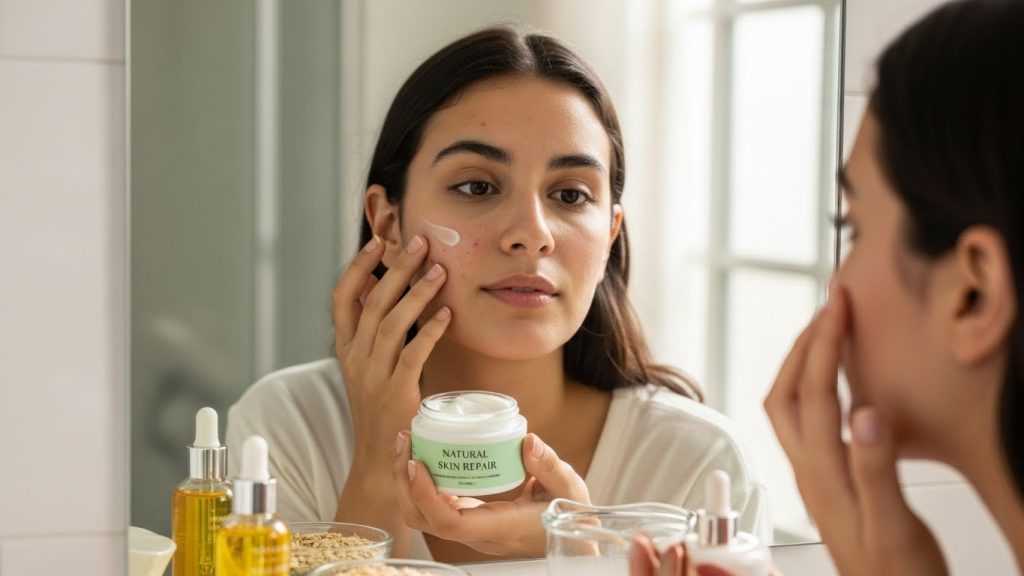
Night Routine: How to Treat Acne Scars and Dark Marks at Home
At night, you focus on repair and gentle resurfacing.
Step 1: Remove Makeup and Sunscreen
If you wear makeup or sunscreen:
- Use a cleansing balm, oil cleanser, or micellar water first
- Follow up with your gentle face wash
Double cleansing helps avoid clogged pores and new breakouts.
Step 2: Hydrating Toner or Essence (Optional)
If your skin feels tight or dry, apply a hydrating toner with ingredients like:
- Hyaluronic acid
- Glycerin
- Panthenol
- Aloe vera
Pat gently into the skin.
Step 3: Treatment Step (Exfoliant or Retinoid)
Alternate evenings between gentle exfoliation and retinoids (if your skin can handle it):
- Exfoliation nights (1-3x per week):
- Use an AHA/BHA product after cleansing (no scrubbing).
- Avoid combining with retinoids in the same night if you’re a beginner.
- Retinoid nights (2-3x per week):
- Apply a pea-sized amount of retinol or adapalene to dry skin.
- Avoid eye area, corners of nose, and lips.
- Moisturize well afterward.
If your skin is very sensitive, skip retinoids and focus on niacinamide, azelaic acid, and gentle exfoliation instead.
Step 4: Brightening Serum (On Non-Retinoid Nights)
On nights when you’re not using a retinoid or exfoliant, you can use:
- Azelaic acid
- Niacinamide
- A gentle brightening serum (e.g., alpha arbutin, licorice root)
Step 5: Moisturizer
Finish with a moisturizer to lock everything in:
- Choose one that’s not too heavy, but hydrating enough to offset actives
- Look for ceramides, squalane, and calming ingredients
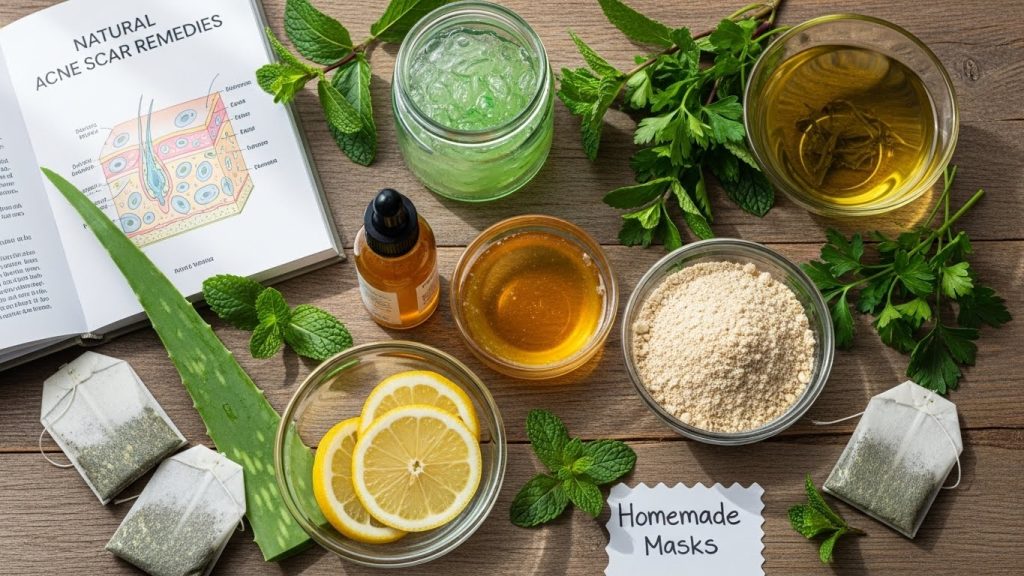
Natural Home Remedies: What Helps and What to Avoid
When people search how to treat acne scars and dark marks at home, “home remedies” always come up. Some are okay; some can do more harm than good.
Things That May Help (As Support, Not Magic Cures)
- Aloe vera gel: calming and hydrating
- Green tea extract/soaked pads: antioxidant and soothing
- Licorice root extract: gentle brightening in proper skincare formulas
These are best used as part of real skincare products, not random DIY mixtures.
Things to Avoid on Your Face
Skip these popular-but-damaging DIY ideas:
- Lemon juice (too acidic, can burn and worsen pigmentation)
- Baking soda (disrupts skin’s pH, can cause irritation)
- Toothpaste (too harsh and drying, not made for skin)
- Undiluted essential oils directly on skin
They can seriously irritate your skin and create more scarring and marks.
Lifestyle Tips That Help Fading Scars & Marks
Skincare products can do a lot, but these habits make a big difference too:
- Stop picking or squeezing. Use spot treatments or pimple patches instead.
- Change pillowcases often. Keeps bacteria and oil buildup lower.
- Manage active acne. If breakouts are severe, talk to a dermatologist about proper treatment.
- Stay consistent. Improvements can take 8-12 weeks or more.
When At-Home Treatments Aren’t Enough
There’s a limit to how to treat acne scars and dark marks at home. Deep, textured scars often need professional treatments, such as:
- Microneedling (done by a professional)
- Laser resurfacing
- Chemical peels (medium/deep)
- Subcision or fillers for rolling scars
Never attempt strong chemical peels or microneedling with long needles at home you can easily make scars worse or cause infection.
If your scars affect your confidence or don’t respond to months of consistent at-home care, it’s worth consulting a dermatologist.
FAQ: How to Treat Acne Scars and Dark Marks at Home
How long does it take for acne scars and dark marks to fade?
Dark marks can start to lighten in 4-8 weeks with consistent use of sunscreen and brightening ingredients. Deeper scars and stubborn pigmentation may take several months or longer and may require professional help for significant improvement.
Can acne scars go away completely with home treatment?
Shallow scars and dark marks can improve a lot and sometimes become barely noticeable. However, deep indented scars usually won’t disappear completely with home care alone. You can soften and blur them, but professional treatments are often needed for dramatic changes.
Is it safe to use multiple active ingredients together?
Yes, but you need to be careful:
— Don’t introduce everything at once. Start with one active (like niacinamide or vitamin C).
— Avoid layering strong exfoliants and retinoids in the same night if you’re new to actives.
— If your skin burns, peels excessively, or becomes very red, scale back.
Do I need to use sunscreen if I’m only indoors?
Yes. UV rays can come through windows, and even short exposures add up over time. Sunscreen is essential in how to treat acne scars and dark marks at home because it prevents new pigmentation and protects your skin from further damage.
Can diet help with acne scars and dark marks?
Diet alone won’t erase scars, but:
— Drinking enough water
— Eating fruits and vegetables rich in antioxidants
— Reducing very high sugar and highly processed foods
Final Thoughts
Learning how to treat acne scars and dark marks at home is mostly about:
- Protecting your skin every single day with sunscreen
- Using a few proven ingredients (vitamin C, niacinamide, retinoids, azelaic acid, gentle exfoliants)
- Being patient and consistent
- Avoiding harsh DIY hacks and picking at your skin
You don’t need a complicated routine just a smart one you can stick to. Over time, your marks can fade, your texture can look smoother, and your skin can regain a more even, healthy appearance.