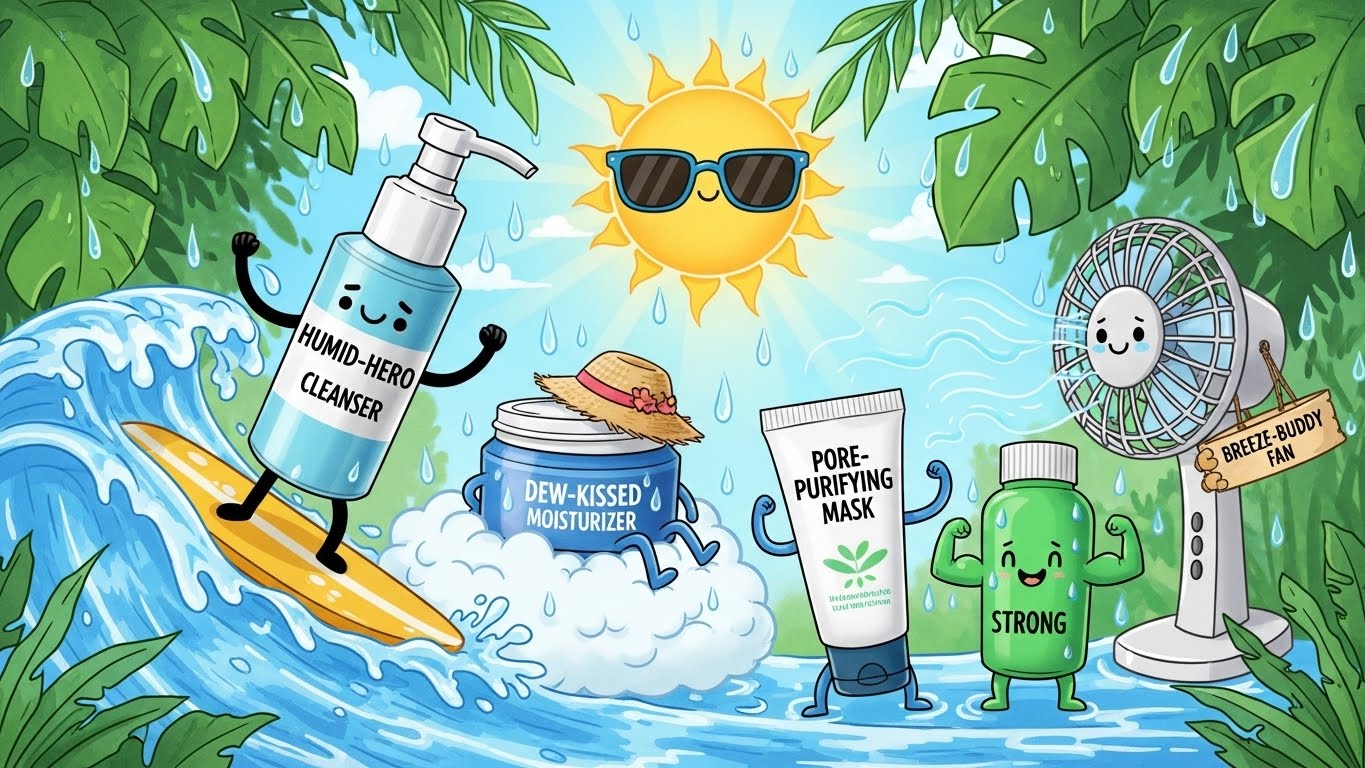
Living in a hot, sticky place can make your skin feel constantly oily, sweaty, and clogged. Makeup slides off, pores look bigger, and breakouts seem to appear overnight. That’s why you need a best skincare routine for humid climate that’s built specifically for heat, sweat, and moisture in the air not just any generic routine.
In this guide, you’ll learn:

- How humidity affects your skin
- The best skincare routine for humid climate (step-by-step, morning and night)
- Product textures and ingredients that work in high humidity
- Tips for oily, dry, and combination skin in tropical weather
- Common mistakes that make skin greasier or more congested
Table of Contents
How Humidity Affects Your Skin
Before building the best skincare routine for humid climate, it helps to know what’s going on with your skin.
1. More Sweat and Oil on the Surface
In a humid climate, sweat doesn’t evaporate easily. It sits on your skin, mixing with sebum (oil), makeup, and pollution. That can lead to:
- Clogged pores
- Blackheads and whiteheads
- Shiny, greasy T-zone

2. Higher Risk of Breakouts
Trapped sweat and oil, plus bacteria on the skin, create the perfect environment for breakouts, especially on the forehead, nose, chin, and jawline.
3. Dehydration Under the Surface
Humid air can trick you into thinking your skin is hydrated, but harsh cleansers and over-exfoliating can still damage your skin barrier. Skin may feel oily on top but tight or rough underneath.
4. Makeup Melting and Pilling
Heavy creams and thick makeup don’t sit well in hot, humid weather. They can slide around, pill, or make your skin look greasy instead of glowing.
The key is lightweight, breathable layers in your best skincare routine for humid climate not heavy products.
Morning: Best Skincare Routine for Humid Climate
Your morning routine should be all about oil control, hydration, and protection without feeling heavy.
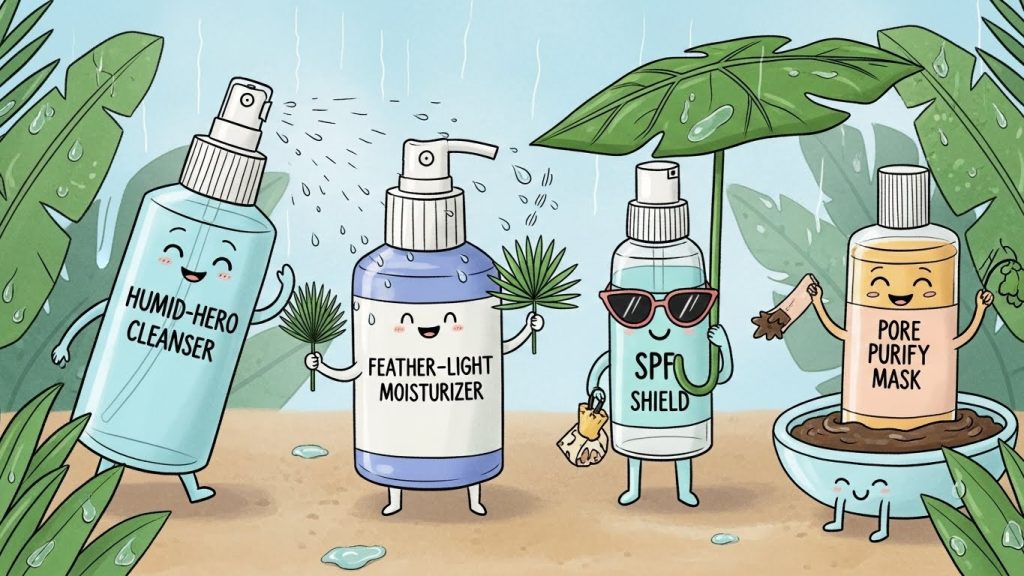
Step 1: Gentle, Deep-Cleaning Cleanser
Use a gentle gel or foaming cleanser to remove sweat and excess oil without stripping your skin.
Look for:
- Sulfate-free formula
- Terms like “gentle,” “pH-balanced,” “for normal to oily skin”
- Non-comedogenic (won’t clog pores)
Avoid harsh soaps that leave your skin feeling tight this can cause even more oil production later.
Step 2: Lightweight Hydrating Toner
In humid weather, you don’t need thick layers, but you still need hydration. A light, watery toner helps balance your skin.
Ingredients to look for:
- Hyaluronic acid
- Glycerin
- Green tea or centella asiatica (soothing)
- Niacinamide (great for oil control and pores)
Apply a small amount with your hands and pat it in. Keep it light no need to soak cotton pads.
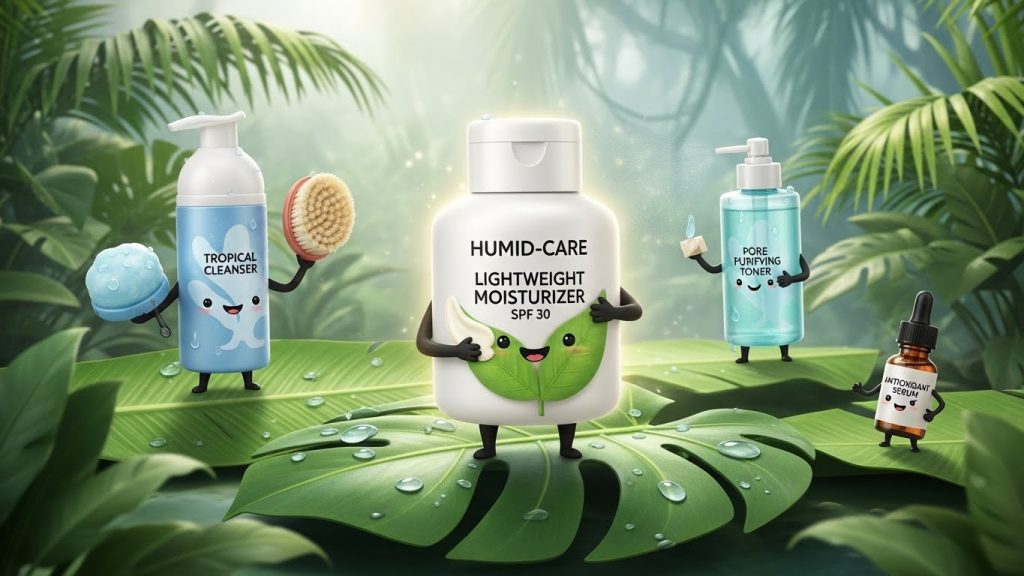
Step 3: Serum for Your Main Skin Concern
This is where you customize your best skincare routine for humid climate.
- If you’re oily/acne-prone: Choose a serum with niacinamide, zinc, or salicylic acid (BHA) to help control oil and keep pores clear.
- If you’re dull or uneven: Vitamin C serum can brighten and protect against pollution and sun damage.
- If you’re dehydrated: Use a hyaluronic acid serum for water-based hydration without heaviness.
Use only 1-2 pumps or a few drops; more product doesn’t equal better results.
Step 4: Oil-Free or Gel Moisturizer
Even in humid climates, you still need moisturizer just a lighter one.
Choose:
- Gel or gel-cream texture
- “Oil-free,” “non-comedogenic,” or “for combination/oily skin”
- Ingredients like glycerin, aloe, panthenol, or squalane in small amounts
If you’re very oily, you can go for a hydrating serum + sunscreen combo and use just a tiny amount of moisturizer, but don’t skip it completely.

Step 5: Sweat-Resistant, Non-Greasy Sunscreen
Sunscreen is non-negotiable, especially with strong UV in hot climates.
Look for:
- Broad-spectrum SPF 30 or higher
- Lightweight gel, fluid, or milk texture
- “Matte” or “oil-control” formulas if you get shiny
- Water/sweat-resistant if you’re outside a lot
Apply generously (about two fingers’ length of product for face and neck). Let it set for a few minutes before makeup.
Daytime Tips for Skin in Humid Weather
Use these habits to support the best skincare routine for humid climate throughout the day. You can also read our this article if you are looking for skin pregnancy safe care routine.
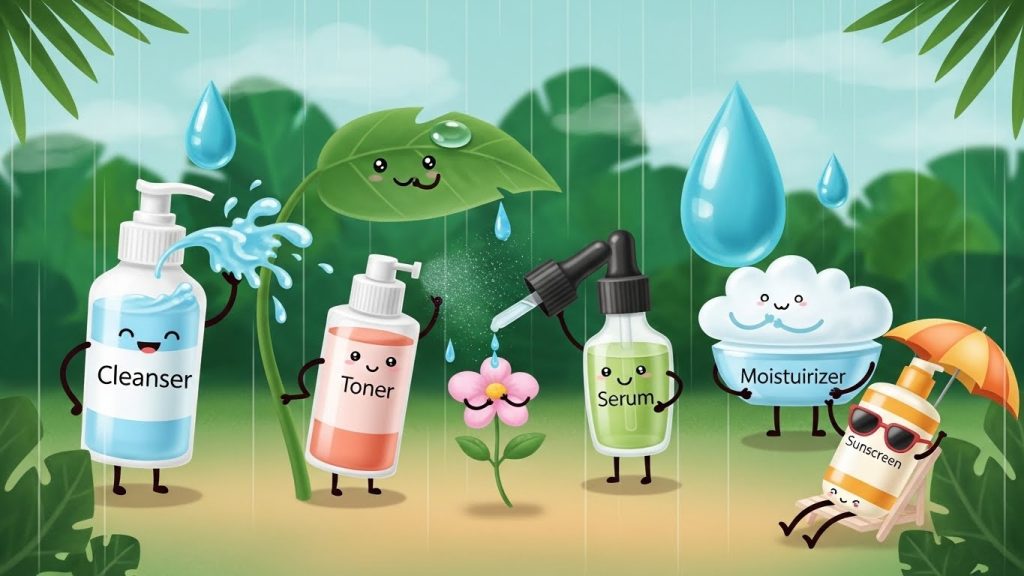
1. Blot, Don’t Over-Wash
Instead of washing your face multiple times (which can irritate skin), use blotting papers or a soft tissue to absorb excess oil and sweat.
2. Avoid Heavy Powder Layering
Too much powder can mix with sweat and clog pores. Use a light dusting on the T-zone only and blot when needed.
3. Choose Lightweight Makeup
- Use a tinted moisturizer or light foundation instead of full-coverage heavy formulas.
- Look for “long-wear,” “oil-free,” or “sweat-resistant” labels.
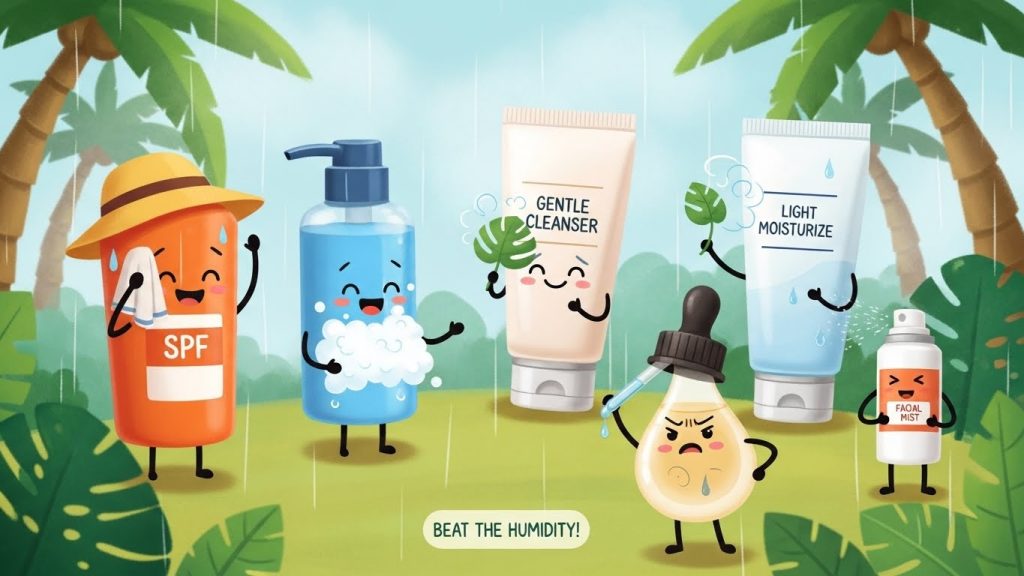
Night: Best Skincare Routine for Humid Climate
Nighttime is for deep cleansing and repair.
Step 1: Double Cleanse (If You Wear Sunscreen or Makeup)
In humid climates, sunscreen + sweat + pollution can sit heavily on your skin, so double cleansing is helpful.
- First cleanse:
- Use a cleansing balm, oil cleanser, or micellar water to break down sunscreen and makeup.
- Second cleanse:
- Use your gentle gel or foaming cleanser to wash away residue.
This keeps pores cleaner and reduces breakouts without scrubbing.
Step 2: Hydrating Toner or Essence
Just like in the morning, apply a light hydrating toner to replenish water after cleansing.
If your skin is sensitive, choose something fragrance-free and soothing (aloe, centella, panthenol).
Step 3: Treatment Serum (Exfoliation or Repair)
Here you can add active ingredients based on your skin’s needs:
- For clogged pores & texture:
- Use a BHA (salicylic acid) serum 2-3 nights per week.
- For dullness:
- Use a gentle AHA (like lactic or mandelic acid) a couple of nights per week.
- For barrier repair:
- Choose a serum with niacinamide or ceramides.
Avoid using strong acids every night in a humid climate you’re already dealing with sweat and friction, so over-exfoliating can backfire.
Step 4: Lightweight Night Moisturizer
You don’t need a super heavy night cream in a tropical climate. Instead:
- Use a slightly richer gel-cream than your daytime one.
- If you have oily skin, your daytime moisturizer may also work at night.
- If you’re combination, use more product on dry areas (cheeks) and less on oily areas (T-zone).
Optional Step: Spot Treatments
If you get breakouts:
- Apply a salicylic acid or benzoyl peroxide spot treatment only on blemishes, not your whole face.
- Use after serum and before moisturizer (or per product instructions).
Best Skincare Routine for Humid Climate by Skin Type
Oily Skin
- Gel cleanser (morning and night)
- Hydrating toner
- Oil-control serum (niacinamide, zinc, or BHA)
- Oil-free gel moisturizer
- Matte or gel sunscreen
Extra tips:
- Use BHA 2-3 nights a week.
- Avoid heavy, occlusive creams on the whole face.
Combination Skin
- Gentle foaming or gel cleanser
- Hydrating toner
- Light serum (vitamin C or niacinamide)
- Gel-cream moisturizer (more on cheeks, less on T-zone)
- Lightweight sunscreen
Extra tips:
- Spot-treat oily areas with BHA.
- Use slightly richer cream on dry patches if needed.
Dry or Dehydrated Skin in Humid Climate
Yes, you can still be dry in humid air, especially if you over-cleanse.
- Creamy gel or milk cleanser (not harsh foam)
- Hydrating toner or essence
- Hyaluronic acid or glycerin-based serum
- Light but nourishing moisturizer (with ceramides or squalane)
- Hydrating sunscreen
Extra tips:
- Avoid over-exfoliating.
- Use a hydrating mask once or twice a week instead of heavy oils.
Common Mistakes in Humid-Weather Skincare
To truly follow the best skincare routine for humid climate, avoid these traps:
- Skipping moisturizer completely
- Skin can get dehydrated and produce more oil as a rebound.
- Using harsh scrubs every day
- Leads to irritation, redness, and damaged barrier.
- Layering too many heavy products
- Causes clogged pores, pilling, and sticky feeling.
- Not cleansing sunscreen properly
- In humid climates, leftover sunscreen, sweat, and makeup easily cause breakouts.
- Sleeping with makeup on
- Especially damaging when mixed with sweat and oil all day.
FAQs: Best Skincare Routine for Humid Climate
Do I still need moisturizer in a humid climate?
Yes. Even if your skin feels oily, it still needs water and barrier support. Choose a light, oil-free gel moisturizer instead of a thick cream.
How often should I exfoliate in humid weather?
For most people, 1-3 times per week with a gentle chemical exfoliant (like BHA or a mild AHA) is enough. Daily strong exfoliation in humid climates can irritate your skin and cause more breakouts.
What kind of sunscreen is best in a humid climate?
Use a lightweight, non-greasy, broad-spectrum SPF 30 or higher. Gel, fluid, or water-based sunscreens are usually more comfortable and less likely to feel heavy in humid weather.
Why does my skin feel oily but also tight?
This is a sign of dehydrated skin not enough water, but still producing oil. Focus on gentle cleansing, hydrating toners/serums, and lightweight moisturizers instead of stripping your skin.
Final Thoughts
The best skincare routine for humid climate is all about balance:
- Cleanse thoroughly but gently
- Hydrate with light, water-based layers
- Protect your skin with a non-greasy sunscreen
- Use targeted treatments for breakouts or dullness without overdoing it
With the right products and textures, your skin can feel fresh, balanced, and comfortable even on the hottest, stickiest days.