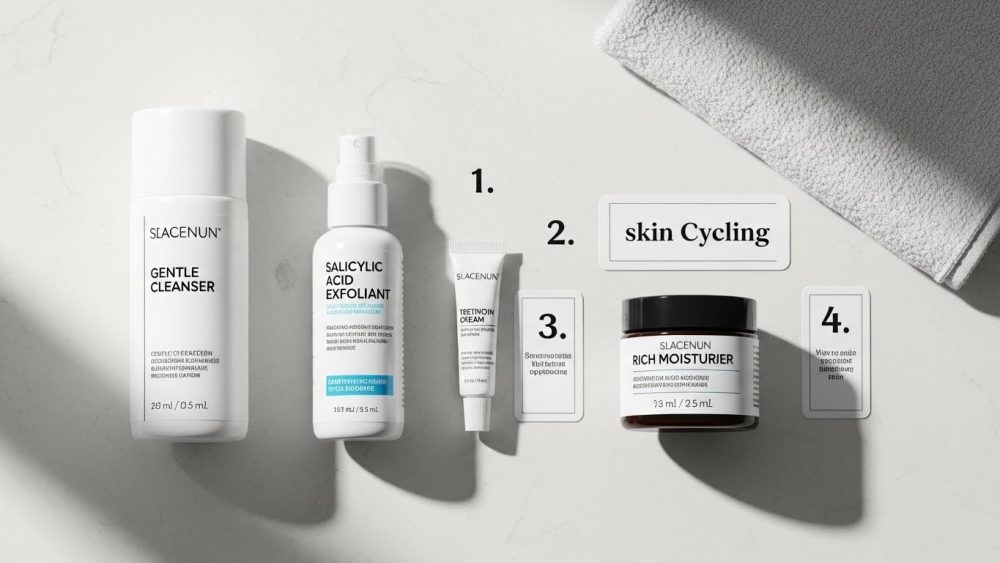
If you’ve ever burned your face with too many serums at once, skin cycling was basically invented for you. Instead of layering acids, retinol, and brightening serums every night, you follow a simple schedule so your skin gets the benefits of powerful ingredients without the irritation.
This guide breaks down a skin cycling routine for beginners you can follow at home with clear steps, product tips, and safety notes.
Quick note: This is general educational info, not medical advice. If you have a skin condition or use prescription treatments, always check with a dermatologist first.
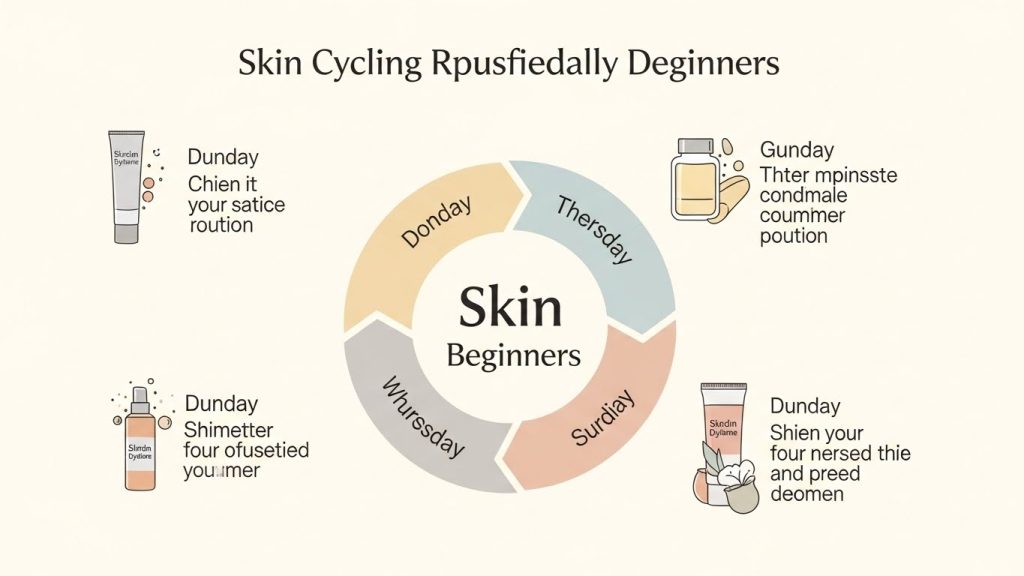
Table of Contents
What Is Skin Cycling?
Skin cycling is a 4-night skincare schedule that rotates between:
- Exfoliation night
- Retinol night
- Recovery night
- Recovery night (again)
…then you repeat.
The idea is simple:
- One night you exfoliate to clear away dead skin.
- One night you use retinol to boost renewal.
- Two nights you let your skin recover with gentle, hydrating products.
For beginners, this structured rhythm is a great way to start using strong ingredients safely.
Who Is a Skin Cycling Routine for?
A skin cycling routine for beginners can be a good fit if:
- You’re new to acids and retinol.
- Your skin gets easily red, tight, or flaky with actives.
- You feel overwhelmed by complicated routines.
- You want a simple, repeatable plan.
You may need a modified version if:
- You have very sensitive or rosacea-prone skin.
- You have active eczema or open, inflamed skin.
- You’re pregnant or breastfeeding (retinoids are generally not recommended always ask your doctor).
Your Basic Daily Routine (Morning & Night)
Before we plug in the skin cycling schedule, you need a simple base routine:
Morning (every day)
- Gentle cleanser
- Hydrating toner or simple serum (optional)
- Moisturizer
- Sunscreen SPF 30+

Night (every night)
- Gentle cleanser
- Treatment (depends on which night of the cycle you’re on)
- Moisturizer
Once this is in place, you can drop exfoliants and retinol into specific nights.
4-Night Skin Cycling Routine for Beginners
Here’s the classic beginner-friendly cycle:
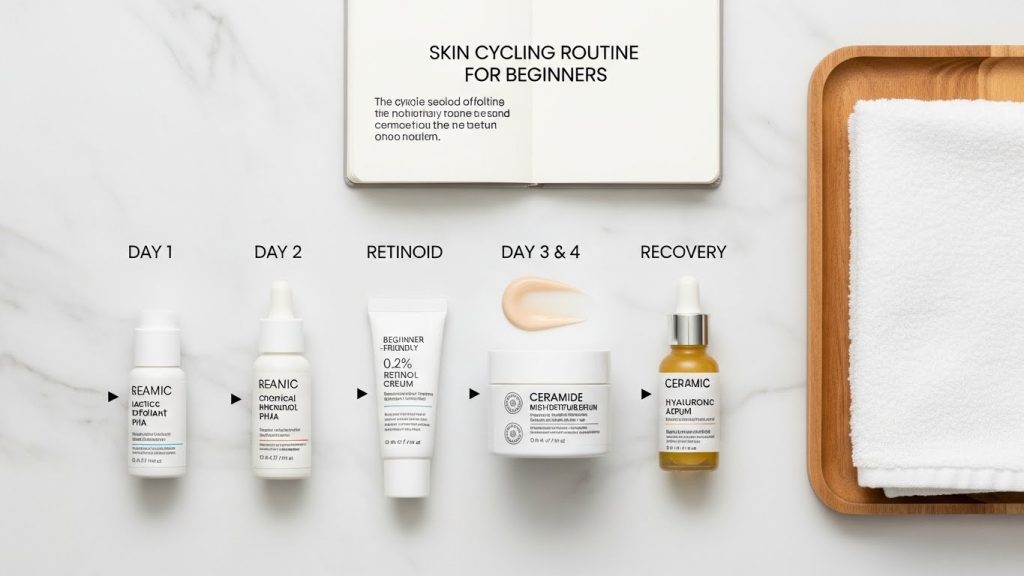
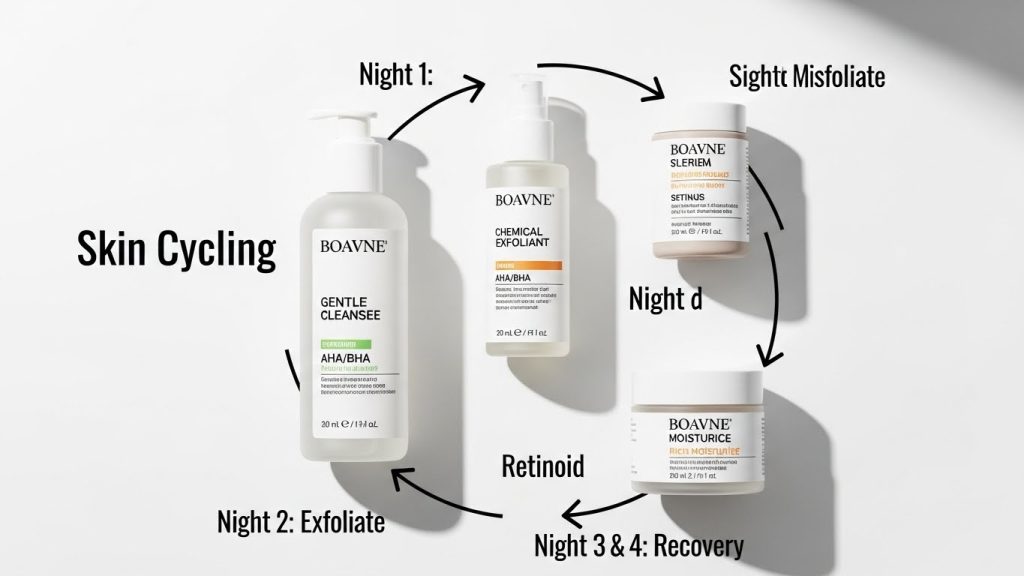
- Night 1 – Exfoliation
- Night 2 – Retinol
- Night 3 – Recovery
- Night 4 – Recovery
Then you go back to Night 1 and repeat.
I’ll walk you through each night step by step.
Night 1: Exfoliation Night
Goal: gently remove dead skin cells so later products work better and skin looks smoother.
Step-by-step
- Cleanse:
- Use your regular gentle cleanser. Pat dry don’t rub.
- Apply chemical exfoliant:
- Choose ONE product, not multiple. For beginners:
- Lactic acid 5-10%
- Mandelic acid 5-10%
- Very gentle glycolic acid, or a low-dose BHA (salicylic acid) if you’re oily/acne-prone.
- Apply a thin, even layer over dry skin, avoiding eyes and corners of nose/lips.
- Choose ONE product, not multiple. For beginners:
- Moisturize:
- After a few minutes, apply a simple, fragrance-free moisturizer.
- Look for ingredients like glycerin, hyaluronic acid, ceramides, and squalane.

Tips for exfoliation night
- No scrubs. Avoid physical scrubs with rough particles.
- Skip other strong actives (retinol, strong vitamin C, benzoyl peroxide) on this night.
- If you’re super sensitive, you can rinse off the exfoliant after 10-15 minutes instead of leaving it on.
Night 2: Retinol Night
Goal: stimulate cell turnover and support collagen using a retinoid.
Step-by-step
- Cleanse:
- Same gentle cleanser as usual. Pat skin completely dry.
- Moisturizer “buffer” (optional but great for beginners):
- Apply a thin layer of moisturizer first if your skin is easily irritated.
- Let it absorb for 5-10 minutes.
- Apply retinol:
- Use a small pea-sized amount for your whole face.
- Dot on forehead, cheeks, and chin, then spread evenly, avoiding eyes, corners of nose, and lips.
- Beginners should use an over-the-counter retinol or retinaldehyde, not prescription-strength tretinoin right away.
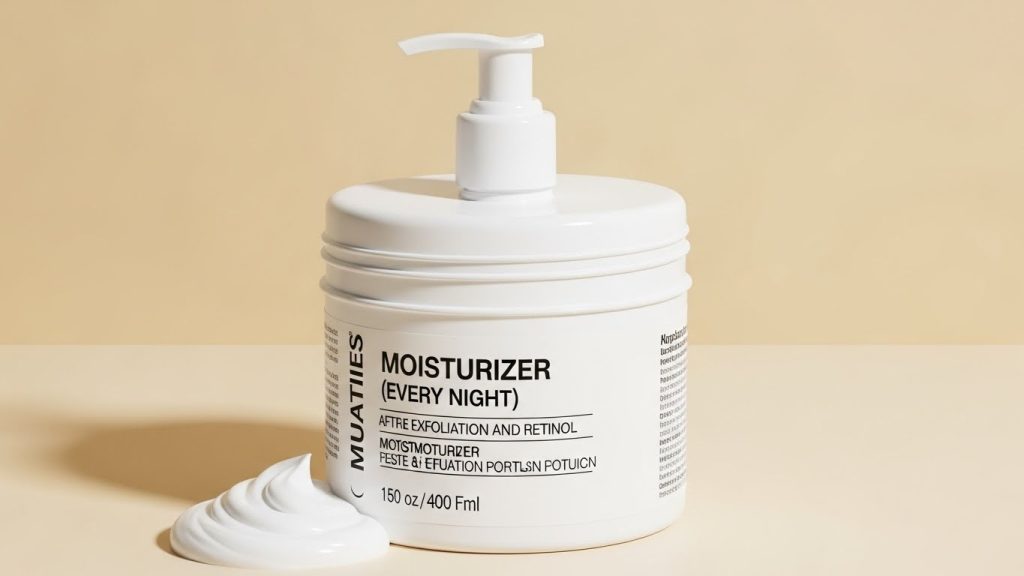
- Moisturizer again:
- Finish with another layer of moisturizer to seal in hydration.
Safety notes for retinol night
- Retinoids are generally not recommended in pregnancy or while breastfeeding. Always talk to your doctor.
- Don’t use retinol on broken, sunburned, or very irritated skin.
- Avoid adding exfoliating acids, benzoyl peroxide, or very strong vitamin C in the same routine until your skin is used to retinol.
Nights 3 & 4: Recovery Nights
Goal: let your skin rest, repair, and rehydrate after exfoliation and retinol.
On these nights you do not use acids, retinoids, peels, or strong brightening serums.
Step-by-step
- Cleanse:
- Stick with your gentle cleanser. No cleansing brushes or scrubs.
- Hydrating toner or serum (optional):
- Choose something calming and simple:
- Hyaluronic acid
- Glycerin
- Panthenol (vitamin B5)
- Centella asiatica (cica)
- Oat or aloe
- Choose something calming and simple:
- Moisturizer:
- Use a barrier-supporting moisturizer with ingredients like:
- Ceramides
- Squalane
- Shea butter (for dry skin)
- Cholesterol & fatty acids
- Use a barrier-supporting moisturizer with ingredients like:
- Optional extra: facial oil or sleeping mask:
- If your skin feels very dry or tight, press a few drops of a gentle facial oil (like squalane) over your moisturizer or use a hydrating sleeping mask.
Recovery nights are the secret weapon in a skin cycling routine for beginners they prevent irritation and give your skin time to rebuild.
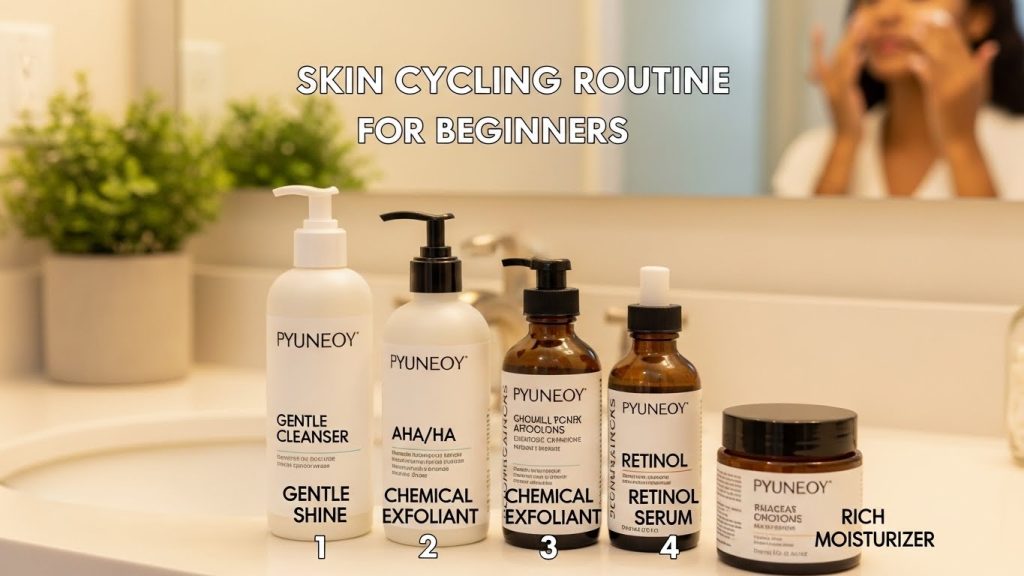
What About the Morning Routine During Skin Cycling?
Your morning routine stays the same every day, regardless of which night you’re on:
- Gentle cleanser or just water rinse (if you’re dry/sensitive)
- Hydrating toner or serum
- Lightweight moisturizer
- Sunscreen SPF 30+
Sunscreen is especially important when you’re using exfoliants or retinol, because your skin can be more sensitive to the sun.
How Long Before You See Results?
With a consistent skin cycling routine for beginners, many people notice:
- Smoother texture in 2-4 weeks
- More glow and fewer dull patches in 4-6 weeks
- Improvement in fine lines and dark spots in 8-12+ weeks
Think of it like a workout plan for your skin results come from consistency, not from overdoing it.
How to Adjust Skin Cycling for Your Skin Type
Oily / Acne-Prone Skin
- Keep exfoliation night, but choose a product with salicylic acid (BHA) or a mix of AHA/BHA.
- Retinol night is great for acne and texture stick with it, but moisturize enough.
- On recovery nights, use oil-free or gel moisturizers labeled “non-comedogenic.”
If you have acne skin issue you can read our this article How to Treat Acne Scars and Dark Marks at Home
Dry / Dehydrated Skin
- Use a very gentle AHA (like lactic or mandelic acid) and maybe exfoliate only every second cycle if you feel dry.
- Buffer retinol with moisturizer before and after.
- On recovery nights, consider a thicker cream and possibly a sleeping mask.
Combination Skin
- Treat T-zone (forehead, nose, chin) more like oily skin and cheeks more like dry skin.
- You can use BHA on just the T-zone and a gentler AHA elsewhere.
Sensitive Skin
- Start with a modified cycle:
- Night 1: very gentle exfoliant or skip
- Night 2: low-strength retinol or bakuchiol (retinol alternative)
- Nights 3-5: recovery
- Introduce one active at a time and patch-test everything. If you are living in a humid environment you can read this Best Skincare Routine for Humid Climate.
Common Mistakes in a Skin Cycling Routine for Beginners
To get good results without wrecking your barrier, avoid these:
- Using extra actives on top of the cycle
- Don’t add more acids or treatments on recovery nights “for faster results.” Recovery nights are just as important as the active nights.
- Applying too much product
- With retinol, more is not better. A pea-sized amount is enough for your whole face.
- Changing too many things at once
- If your skin reacts, you won’t know which product is causing it. Introduce one new active at a time.
- Ignoring irritation signals
- Burning, intense redness, or thick, painful peeling means you should back off, add more recovery nights, or see a professional.
- Skipping sunscreen
- Exfoliation and retinol make your skin more sensitive to UV. No SPF = more damage and pigmentation, not less.
Example Weekly Calendar: Skin Cycling Routine for Beginners
Here’s how a week might look:
- Monday – Night 1: Exfoliation
- Tuesday – Night 2: Retinol
- Wednesday – Night 3: Recovery
- Thursday – Night 4: Recovery
- Friday – Night 1 again (Exfoliation)
- Saturday – Night 2 (Retinol)
- Sunday – Night 3 (Recovery)
…and so on.
You don’t have to start on Monday just remember the 4-night pattern and repeat.
FAQ: Skin Cycling Routine for Beginners
Is skin cycling safe for beginners?
Yes, that’s one of its main advantages. A skin cycling routine for beginners introduces exfoliants and retinol in a planned way, with built-in recovery nights to reduce irritation. Just choose gentle products and go slowly, especially if your skin is sensitive.
Can I do skin cycling if I have acne?
Often yes, and it can help. Exfoliation and retinol both support acne-prone skin when used correctly. Choose products made for acne-prone or oily skin and avoid layering too many drying treatments (like benzoyl peroxide + strong retinoid + acids in the same routine). If your acne is moderate or severe, see a dermatologist for a personalized plan.
What if my skin is too sensitive for retinol?
You can still follow a modified skin cycling routine for beginners:
— Use a very gentle retinol only one night per cycle, or
— Try a retinol alternative like bakuchiol, or
— Use only exfoliation + recovery nights at first.
If even that is too much, focus only on hydrating, barrier-repairing products and consult a professional
Do I have to exfoliate and use retinol forever?
You don’t have to but many people keep a version of skin cycling long-term because it works. You can always:
— Take breaks if your skin feels irritated.
— Reduce frequency (e.g., exfoliate once per 8 nights instead of 4).
— Adjust based on seasons (less exfoliation in winter, etc.).
Can I do skin cycling while pregnant?
Most guidelines advise avoiding retinoids (retinol, retinal, tretinoin, adapalene, etc.) during pregnancy and often while breastfeeding. You may still be able to:
— Use very gentle exfoliation occasionally, if your doctor approves.
— Focus your “cycle” on hydrating and barrier-restoring products instead.
Always check with your OB-GYN or dermatologist before using actives in
Final Thoughts
A skin cycling routine for beginners is all about balance: giving your skin the power of exfoliants and retinol, but also the time and moisture it needs to repair.
If you:
- Cleanse gently
- Follow the 4-night pattern (exfoliate → retinol → recovery → recovery)
- Moisturize generously
- Wear sunscreen every morning
…you’ll be on your way to smoother, brighter, healthier-looking skin without the constant burning, peeling, and confusion that comes from throwing random actives at your face every night.